
The Ultimate Guide to Indian Cotton Sarees: Regional Weaves & Styling for 2026
-
Last Updated: May 14, 2026
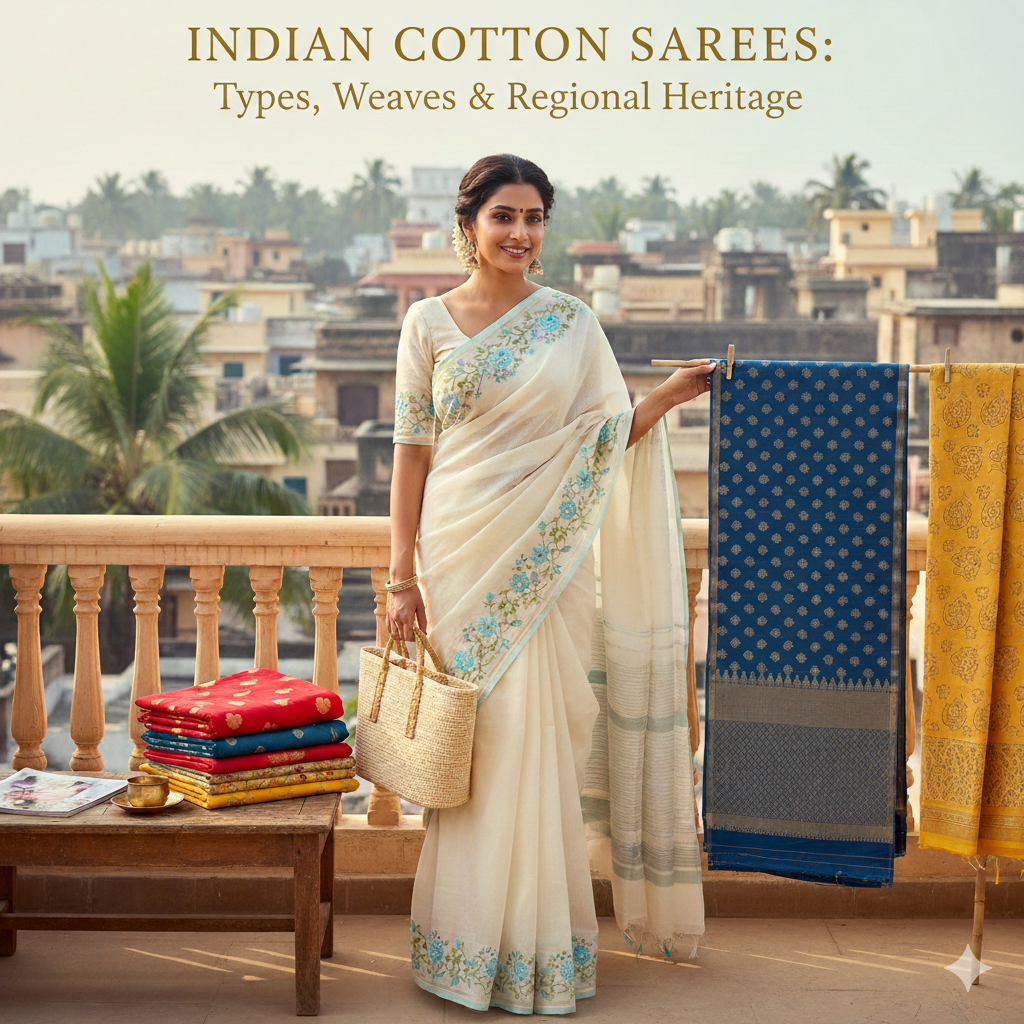
India’s cotton sarees are shaped by climate, region, and weaving traditions—each state offering a distinct cotton weave suited to its environment. At Trend In Need, we curate these weaves with respect for their origin, weaving method, and real-world wearability.
Whether you’re navigating the coastal humidity of Mumbai, the professional pace of Bangalore, or the festive grandeur of Delhi, our 2026 collection is curated for every Indian climate. We provide insured pan-India delivery with real-time tracking, ensuring your authentic handloom reaches your doorstep safely, no matter where you are.
Quick Selection: The 2026 Cotton Matrix
| Fabric Type | Availability | Best For | Key Feature |
| Kota Doria | [Shop Collection] | Extreme Heat | Square "Khat" air pockets |
| Mulmul Cotton | [Shop Collection] | Humid Summers | Ultra-soft "Woven Air" |
| Tant Cotton | [Shop Collection] | Daily Wear | Crisp texture & wide borders |
| Banarasi Cotton | [Shop Collection] | Festive/Weddings | Rich woven motifs, breathable |
| Jamdani | [Shop Collection] | Formal Events | Intricate hand-woven motifs |
| Bhagalpur | [Shop Collection] | Office/Workwear | Earthy, textured slub finish |
| Ikat Cotton | [Shop Collection] | Festive Casual | Bold geometric resist-dye |
| Linen Cotton | [Shop Collection] | Travel/Corporate | Structured & wrinkle-resistant |
Pan-India Reach: Whether you’re choosing Mulmul for Mumbai’s humidity, structured cotton for Bangalore office wear, or festive Banarasi cotton for Delhi weddings, Trend In Need delivers curated cotton sarees across India. From Chennai to Kolkata, we ensure traditional heritage reaches your doorstep.

📊 Fascinating Cotton Facts & Stats
-
Ancient Heritage: Cotton has been used in India for over 7,000 years, dating back to the Indus Valley Civilisation.
-
Global Leader: India is currently the world's largest producer of cotton, supporting the livelihoods of millions in rural areas.
-
Eco-Friendly Footprint: 100% biodegradable and renewable, cotton can fully decompose in under 6 months in natural conditions.
-
High Absorbency: Cotton can absorb up to 27 times its own weight in water, which is why it is the superior choice for staying fresh during Indian summers.
-
Sustainable Handlooms: While it takes approximately 1,400 gallons of water to produce one pair of jeans, traditional handloom cotton uses significantly less water and energy.
-
Dyeing Power: Cotton is the most dye-absorbent natural fibre, which allows for the vibrant, long-lasting colours found in Ikat and Tant sarees.
A Regional Tapestry: The Diversity of Indian Cotton Weaves
How do geographical regions influence cotton saree designs?
India's cotton heritage is woven into its geography. From the humid plains of Bengal to the arid deserts of Rajasthan, every region has developed a specific weaving technique to suit its local climate and cultural needs.
Below is a detailed guide to the most celebrated regional cotton sarees, categorised by their unique weaving styles and regional origins.

1. Tant Cotton Sarees – West Bengal
Why is Tant the best choice for tropical humidity?
Tant sarees are traditionally woven in the Nadia and Murshidabad districts to handle Bengal’s tropical humidity. They are characterised by a light, airy weave and a crisp texture that doesn't cling to the skin. A favourite for the humid afternoons of Mumbai and Kolkata.

-
Key Highlights: Wide contrast borders and excellent moisture absorption.
-
Curator's Note: Our Tant collection features traditional motifs that maintain their structural integrity even after multiple washes.
2. Mulmul Cotton Sarees – Eastern India
Is Mulmul really the softest cotton fabric available?
Historically described as “woven air,” Mulmul is an ultra-soft fabric known for exceptional airflow and comfort. It is ideal for long summer days in coastal regions like Mumbai or Chennai.

-
Key Highlights: Extremely fine cotton yarn and a gentle, liquid-like drape.
-
Styling Tip: Mulmul looks best when allowed to flow naturally—pair it with a sleeveless blouse for a relaxed summer look.
3. Kota Cotton Sarees – Rajasthan
How does the "Khat" weave in Kota Doria keep you cool?
Recognised by its unique square weave (Khats), Kota Doria naturally creates tiny air pockets throughout the fabric. This structural design maximises breathability, making it the preferred choice for extreme heat. Ideal for the extreme temperature shifts and grand celebrations in Delhi and North India.

-
Key Highlights: Lightweight, translucent appearance with a surprisingly strong weave.
-
Curator's Note: We recommend a light starch for Kota sarees to highlight the square texture and maintain a polished drape.
4. Banarasi Cotton Silk Sarees – Uttar Pradesh
Can I wear a Banarasi weave without the weight of heavy silk?
Banarasi Cotton Silk blends traditional Mughal-inspired motifs with a breathable cotton base. It offers festive elegance for Delhi weddings without the physical burden of pure heavy silk.

-
Key Highlights: Classic floral motifs on a lighter, more manageable fabric.
-
Best For: Wedding guests and evening ceremonies where elegance is required.
5. Bhagalpuri Cotton Blends – Bihar
What makes Bhagalpuri cotton ideal for a professional office look?
Bhagalpuri weaves often blend cotton with linen or silk, resulting in an earthy "slub" finish. This gives the saree a natural weight and structure that holds its shape through a long workday in Bangalore or Hyderabad.

-
Key Highlights: Subtle sheen and a sophisticated, rustic texture.
-
Styling Tip: Pair with a collared blouse and minimal silver jewellery for a modern corporate look.
Curator’s Care & Maintenance Tips
-
First Wash: Always wash cotton sarees separately in cold water to preserve yarn integrity.
-
Drying: Dry in a shaded area; direct sunlight can fade vibrant regional dyes.
-
Storage: Store folded in breathable fabric bags to avoid moisture build-up.
6. Jamdani Cotton Sarees – Bengal Region
Why is Jamdani considered a masterpiece of handloom?
Jamdani is a labour-intensive "discontinuous weft" technique where motifs are woven directly into the fine muslin base by hand. It represents the pinnacle of craftsmanship in the Bengal region, offering a sheer, lightweight elegance that appears to have "floating" motifs on the fabric surface.

-
Key Highlights: Fine muslin base with intricate, hand-woven patterns.
-
Curator's Note: Our Jamdani collection is chosen for its delicate artistry, making it an excellent choice for formal events and high-end social gatherings.
7. Ikat Cotton Sarees – Telangana & Odisha
How is the unique blurred pattern of Ikat created?
Unlike printed sarees, Ikat patterns are created by resist-dyeing the yarns before they are woven on the loom. This produces distinctive, sharp geometric designs that are identical on both sides of the fabric, known for their bold colour combinations and unique symmetry.

-
Key Highlights: Yarn-dyed before weaving with bold, distinctive patterns.
-
Best for: Festive casual wear and those who appreciate modern, geometric, ethnic aesthetics.
8. Linen–Cotton Blends – Pan-India
Why should I choose a Linen-Cotton blend for travel?
Linen-Cotton sarees combine the crisp structure of linen with the softness and breathability of cotton. This blend yields a fabric that is highly durable, relatively wrinkle-resistant, and easy to manage, making it ideal for long flights or commutes.

-
Key Highlights: Contemporary appeal with a structured yet breathable drape.
-
Styling Tip: These are perfect for Bangalore's corporate environment or Delhi's travel-heavy lifestyle.
Regional Weave Encyclopedia: Expert Guide
While we are currently curating the following collections, we invite you to learn about their unique heritage. For similar textures available today, explore our active collections linked below.
9. South Indian Handloom Cotton – Tamil Nadu
South Indian cottons are celebrated for their strong yarn quality and high thread count, making them extremely durable for frequent wear. They often feature vibrant colours and bold temple borders.
-
Styling Alternative: If you like bold borders, explore our [Tant Cotton Collection].
10. Venkatagiri Cotton – Andhra Pradesh
Woven with very fine yarn, Venkatagiri sarees are known for their smooth drape and subtle zari borders. They are traditionally worn for ceremonies and formal gatherings.
-
Styling Alternative: For a similarly smooth drape, browse our [Mulmul Cotton Collection].
11. Mangalagiri Cotton – Andhra Pradesh
Recognised for their tightly woven body and distinctive "Nizam" borders, these sarees are highly durable and ideal for office wear.
-
Styling Alternative: For a professional, structured look, check our [Bhagalpuri Cotton Blends].
12. Chettinad Cotton – Tamil Nadu
Chettinad sarees use a heavier cotton yarn, creating a thicker fabric with bold checks and vibrant stripes.
-
Styling Alternative: For vibrant patterns and unique textures, view our [Ikat Cotton Collection].
13. Kanchi Cotton – Tamil Nadu
These offer festive designs inspired by traditional Kanchipuram styles but in a lighter, more breathable cotton form.
-
Styling Alternative: To achieve a regal festive appearance, shop our [Banarasi Cotton Silk Collection]
Trend In Need Pan-India Shipping: We dispatch all orders within 3-5 days. From metros like Mumbai, Delhi, and Bangalore to the farthest corners of India, we ensure your saree is packed with care and delivered within 5-7 business days
Frequently Asked Questions
Q1. Where can I buy authentic Indian cotton sarees online? Trend In Need offers a curated collection of authentic Kota, Tant, and Mulmul sarees sourced directly from traditional weaving hubs and delivered pan-India.
Q2. Are cotton sarees suitable for formal office wear? Absolutely. Structured weaves like Bhagalpuri, Maheshwari, and Coimbatore cotton provide a polished appearance while ensuring all-day comfort in corporate settings like Bangalore.
Q3. How can I distinguish between pure cotton and synthetic blends? Authentic cotton feels cool to the touch and absorbs moisture almost instantly. A simple "burn test" on a loose thread can also verify purity; pure cotton will burn with a steady flame and smell like burning paper, leaving behind a fine grey ash.
Q4. Do cotton sarees shrink after the first wash? Natural cotton fibres tend to shrink slightly during the initial wash. To minimise this, we recommend washing your Trend In Need sarees in cold water with a mild detergent and avoiding the use of a dryer.
Q5. What is the best way to maintain the 'crispness' of a Tant or Kota saree? To maintain the characteristic stiff drape of Tant and Kota Doria weaves, we suggest applying a light liquid starch after washing. Always iron the saree while it is slightly damp to ensure a smooth, professional finish.
Q6. Can I wear cotton sarees in the winter, or are they only for summer? Cotton is a versatile, all-season fabric. While its breathability is perfect for summer, it also acts as a natural insulator. In cooler climates like Delhi, you can style a cotton saree with a structured jacket or a pashmina shawl for warmth and elegance.
Q7. Are your cotton sarees eco-friendly and sustainable? Yes. At Trend In Need, our cotton sarees are 100% biodegradable and renewable. Because they are largely produced through traditional handloom weaving practices, they have a significantly lower environmental footprint compared to mass-produced synthetic fabrics.