
Makar Sankranti Colours 2026: What to Wear, Meaning & Regional Traditions Across India
-
Last Updated: May 14, 2026
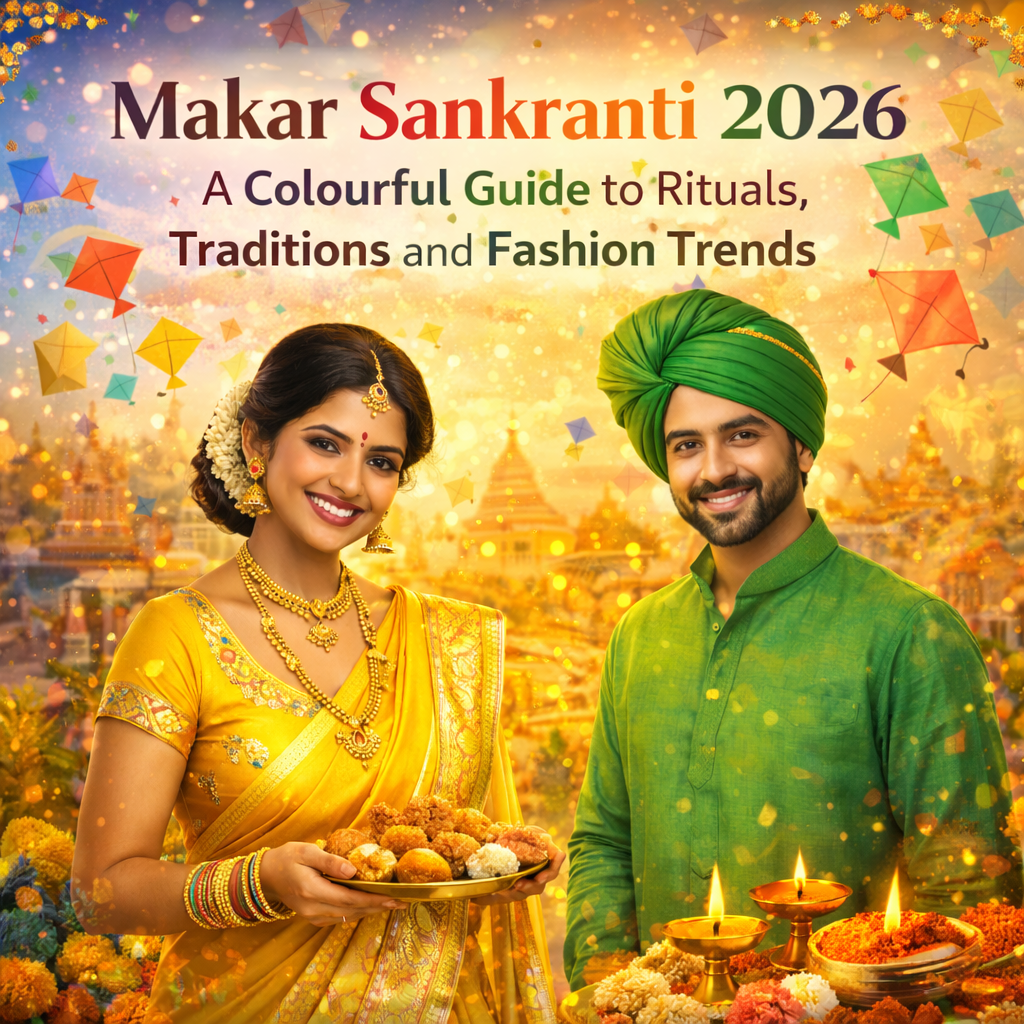
Makar Sankranti is one of India’s most spiritually significant and culturally rich harvest festivals. Celebrated every January, it marks the Sun’s transition into Capricorn (Makara Rashi)—a celestial shift that signifies the end of the winter solstice and the beginning of longer, warmer, and brighter days. This solar movement is seen as a powerful symbol of renewal, abundance, and positivity.
For farming communities, Makar Sankranti represents gratitude for a successful harvest. For households, it is a time for charity, purification, family gatherings, and fresh beginnings. While the festival is known by different names across India—Uttarayan, Pongal, Lohri, and Poush Parbon—the underlying spirit remains universal: honouring nature and welcoming prosperity.
In 2026, Makar Sankranti will be celebrated on Wednesday, 14 January. Since it follows the solar calendar, the date remains largely consistent each year. According to Hindu almanacks, the most auspicious period begins when the Sun enters Capricorn, usually in the afternoon, with rituals commonly performed between mid-afternoon and sunset.
Beyond astronomy and agriculture, Makar Sankranti is deeply associated with colour and mythological symbolism. In Hindu tradition, the festival is linked to powerful narratives of renewal and auspicious transition. It is believed that on this day, Bhishma Pitamah chose to leave his mortal body as the Sun began its northward journey (Uttarayan), making the period especially sacred. Makar Sankranti is also seen as a time of balance and harmony, symbolising the easing of tensions between Surya (the Sun) and Shani (Saturn) as the Sun enters Capricorn. Together, these beliefs reinforce themes of reconciliation, renewal, and cosmic order. From clothing and rangoli to offerings and festive décor, colours play a vital role in expressing spiritual intent, seasonal wisdom, and regional identity.
Makar Sankranti Colours at a Glance (2026)
-
Most auspicious colour: Yellow, symbolising the Sun, warmth, and harvest prosperity
-
Harvest & renewal colour: Green, representing growth, fertility, and gratitude toward nature
-
Ritual purity colours: Red and white, worn together for spiritual balance and devotion
-
Regional auspicious colour: Black, traditionally worn in Maharashtra for warmth and protection
-
Festive celebration colours: Bright blue and orange, popular during kite-flying celebrations in western India
This quick guide helps you choose Sankranti colours based on tradition, region, and the time of celebration.
Why Are Colours So Important in Makar Sankranti Celebrations?
Colours during Makar Sankranti are never chosen at random. Each hue reflects a connection to nature, solar energy, harvest cycles, and spiritual balance. Traditionally, Sankranti colours are inspired by elements such as sunlight, ripened crops, fire, earth, and the winter sky.
Wearing specific colours during the festival is believed to align the body and mind with seasonal change. Whether through garments, food, or decoration, colour becomes a medium to invite positivity, ward off negativity, and celebrate abundance.
Why Is Yellow the Most Auspicious Colour for Makar Sankranti 2026?

Yellow is the most widely worn and auspicious colour during Makar Sankranti. It represents the Sun’s life-giving energy, warmth, wisdom, and prosperity. Closely associated with ripened crops such as mustard and turmeric, yellow symbolises harvest abundance and renewal.
Across India, women traditionally wear yellow sarees, salwar suits, or lehengas, often adorned with golden zari, temple borders, or floral motifs. Men may wear yellow kurtas or angavastrams during rituals.
Festival foods echo this golden hue—til-gul laddoos, turmeric rice, pongal, and jaggery-based sweets reinforce the symbolic presence of yellow.
In Maharashtra, yellow dominates Haldi-Kumkum ceremonies, while in Tamil Nadu, turmeric plants and yellow offerings are central to Pongal rituals.
Explore yellow handloom sarees in mulmul cotton and cotton-silk blends for Makar Sankranti celebrations.
Wearing yellow on Sankranti is believed to attract success, harmony, and good fortune for the year ahead.
Yellow colour at a glance:
-
Symbolises the Sun, warmth, and prosperity
-
Strongly linked to harvest rituals (turmeric, mustard, ripened crops)
-
Popular across regions, especially during Pongal and Uttarayan
What Does the Colour Green Symbolise During Makar Sankranti?

Green symbolises growth, fertility, renewal, and gratitude toward nature. As a harvest festival, Makar Sankranti places strong emphasis on the earth’s generosity, making green a naturally auspicious choice.
Green sarees, kurtas, and lehengas often feature motifs inspired by sugarcane, wheat, vines, and leaves. Women pair green outfits with gold or antique silver borders, while men may wear green turbans or shawls.
In 2026, green also aligns with the growing preference for sustainable and handloom fashion. Lightweight cotton, linen, and cotton-silk fabrics in earthy green tones are especially popular for daytime celebrations.
Green colour at a glance:
-
Represents growth, fertility, and renewal
-
Connected to the earth and future harvest abundance
-
Often chosen for daytime celebrations and sustainable handloom styling
Discover green handloom cotton and linen sarees ideal for daytime Sankranti rituals.
Why Are Red and White Worn Together During Makar Sankranti?

Red and white together represent spiritual balance, joy, and purity. White signifies peace, cleanliness, and new beginnings, while red symbolises vitality, celebration, and divine feminine energy.
This colour combination is especially prominent in eastern India during Poush Parbon, where women traditionally wear white sarees with red borders (lal-paar). Men dress in white dhotis and kurtas, often paired with red scarves.
Red and white are also widely used in temple decorations, ritual offerings, and festive décor, reflecting reverence for the harvest and the sacred.
Red & White colour at a glance:
-
Red symbolises joy and divine energy, white stands for purity and peace
-
Common in ritual wear and temple traditions
-
Strong cultural presence in Poush Parbon and Eastern India celebrations
Is Black Considered Auspicious on Makar Sankranti?

Unlike many Indian festivals, black is considered auspicious during Makar Sankranti, particularly in Maharashtra. Since the festival occurs during peak winter, black clothing is believed to absorb warmth, making it both practical and symbolic.
Traditional black Nauvari and Paithani-inspired sarees are commonly worn during Sankranti, especially for Haldi-Kumkum gatherings. These are often paired with green glass bangles, gold jewellery, and turmeric accents.
Spiritually, black is believed to absorb positive solar energy while protecting the wearer from negative influences.
How to Style a Black Saree for Makar Sankranti (Maharashtra Tradition)
-
Choose breathable fabric (cotton-silk / mulmul blend)
-
Pair with green glass bangles and gold jewellery
-
Add a warm shawl for evening gatherings
-
Keep makeup minimal with a bright bindi for festive contrast
Shop black festive sarees inspired by Maharashtrian Sankranti traditions.
Black colour at a glance:
-
Considered auspicious in Sankranti, especially in Maharashtra
-
Practical for winter because it absorbs warmth
-
Believed to offer protection from negativity and strengthen solar energy
Why Are Bright Colours Like Blue and Orange Popular During Kite Festivals?

In regions such as Gujarat and Rajasthan, Makar Sankranti is celebrated as Uttarayan, famous for vibrant kite-flying festivities. The skies fill with colourful kites, and festive clothing mirrors this joyful spectacle.
Electric blue turbans, orange ghagras, magenta dupattas, and multicoloured prints are common. Mirror work, embroidery, bandhani, and beadwork add movement and sparkle to outfits.
These bright colours symbolise freedom, joy, and release—much like kites soaring freely in the sky.
Bright colours (Blue & Orange) at a glance:
-
Symbolise celebration, freedom, and festive energy
-
Most popular during kite festivals like Uttarayan
-
Often styled with bold prints, bandhani, mirror work, and vibrant contrasts
How Do Regional Traditions Influence Sankranti Colour Choices?
Makar Sankranti celebrations vary across India based on climate, crops, and local customs:
-
Maharashtra: Black and yellow dominate Haldi-Kumkum rituals
-
Tamil Nadu & Andhra Pradesh: Bright silks, gold tones, and white dhotis for Pongal
-
Punjab & Haryana: Red, orange, and magenta inspired by Lohri bonfires
-
West Bengal & Odisha: White and red during Poush Parbon
-
Gujarat & Rajasthan: Multicoloured outfits for kite festivals
Despite regional differences, colour remains a universal expression of gratitude, abundance, and renewal.
Regional Colour Notes You’ll See Across India
North India (Lohri influence): Bonfire celebrations inspire warm colours like red, orange, and deep magenta, often paired with winter-friendly fabrics. A festive contrast is created with bold tones and spicy seasonal foods.
South India (Pongal & Mattu Pongal): Rituals often include white and yellow (turmeric, rice, sacred offerings). Bright silks and cotton-silk blends are common for temple visits and family gatherings.
Bihar & Eastern India (Tusu/Tusu Parab influence): Community celebrations highlight red and white for purity and devotion, along with seasonal sweets and local harvest customs that shape colour choices.
How Are Sankranti Colour Traditions Influencing Fashion in 2026?
In 2026, festive fashion reflects a thoughtful balance between heritage, comfort, and sustainability. Makar Sankranti dressing is no longer limited to ritual wear—it is increasingly shaped by regional traditions, climate, and fabric preferences that allow outfits to be worn beyond the festival.
Regional Colour & Fabric Preferences for Sankranti
| Region | Suggested Colours | Recommended Fabrics (Ideal for Sankranti) |
|---|---|---|
| Gujarat & Rajasthan (Uttarayan) | Blue, Orange, Multi-colour | Cotton, Kota Doria, Chanderi |
| Maharashtra | Yellow, Black, Green | Mulmul cotton, Cotton-silk, Silk blends |
| Tamil Nadu (Pongal) | White, Yellow, Gold | Silk, Cotton-silk, Soft cotton |
| Punjab & Haryana (Lohri) | Red, Orange, Magenta | Cotton, cotton blends, warmer weaves |
| West Bengal & Odisha (Poush Parbon) | Red, White | Handloom cotton, Cotton-silk |
These regional combinations reflect how local climate, rituals, and weaving traditions influence Sankranti dressing choices across India.
Key Fashion Trends Shaping Sankranti Wear in 2026
-
Natural fabrics such as handloom cotton, linen, and cotton-silk blends for comfort and breathability
-
Jewel tones like emerald, ruby, sapphire, and amethyst for elevated festive looks
-
Metallic neutrals, including antique gold and champagne, for subtle festive shine
-
Soft pastels with floral or block prints for modern, fusion styling
-
Contemporary drapes such as dhoti-style sarees and pre-stitched pleats
These trends allow traditional Sankranti colours to transition seamlessly into everyday festive and occasion wear, making them both culturally meaningful and practically versatile.
What Colours to Wear for Makar Sankranti 2026 (Quick Outfit Guide)
Choosing the right colours for Makar Sankranti depends on the time of day, regional customs, and comfort. This quick guide helps you dress appropriately for every part of the celebration.
-
Morning rituals: Yellow or white cotton sarees and outfits, ideal for temple visits and puja
-
Daytime gatherings: Green linen or handloom cotton ensembles that reflect renewal and comfort
-
Evening events: Red, black, or jewel-toned festive sarees for a richer, celebratory look
-
Kite festivals: Bright blues, oranges, and multicoloured prints inspired by Uttarayan festivities
Choosing breathable fabrics and natural dyes enhances both comfort and cultural authenticity, making Sankranti outfits suitable for extended wear.
Frequently Asked Questions About Makar Sankranti 2026
Q1. What is the most auspicious colour for Makar Sankranti?
Yellow is considered the most auspicious colour for Makar Sankranti as it symbolises the Sun, prosperity, warmth, and harvest abundance. It is widely worn across India during the festival.
Q2. Why do people wear black on Makar Sankranti?
In Maharashtra, black is considered auspicious during Makar Sankranti because it absorbs warmth during winter and is believed to protect the wearer from negative energy while attracting positive solar vibrations.
Q3. Which colours should I wear for Makar Sankranti 2026?
Auspicious colours for Makar Sankranti 2026 include yellow, green, red, white, and black. The choice often depends on regional customs, time of celebration, and personal comfort.
Q4. When is Makar Sankranti celebrated in 2026?
Makar Sankranti will be celebrated on Wednesday, 14 January 2026, as it follows the solar calendar and marks the Sun’s entry into Capricorn.
Q5. What fabric is best for Makar Sankranti celebrations?
Natural and breathable fabrics such as handloom cotton, linen, and cotton-silk blends are ideal for Makar Sankranti. These fabrics provide comfort during daytime rituals and are well-suited for traditional festive wear.
Q6. What should I wear for morning puja versus kite-flying celebrations?
For morning puja and rituals, light fabrics in yellow, white, or green are preferred for comfort and auspiciousness. For kite-flying celebrations, brighter colours such as blue, orange, and multicoloured prints are popular, reflecting joy and festivity.
Q7. How is Makar Sankranti celebrated across different regions of India?
Makar Sankranti is celebrated as Pongal in Tamil Nadu, Lohri in Punjab, Poush Parbon in West Bengal, and Uttarayan in Gujarat, with each region having unique rituals and colour traditions.
Q8. Can Sankranti outfits be worn beyond the festival?
Yes, Sankranti outfits in classic colours like yellow, green, red, and white can be styled for other festive occasions, temple visits, and family celebrations throughout the year.
Conclusion: Colour as a Celebration of Life
Makar Sankranti is more than a harvest festival—it is a celebration of light, balance, and renewal. Through its symbolic use of colour, the festival teaches harmony with nature, gratitude for abundance, and hope for new beginnings.
Whether you choose yellow for prosperity, green for growth, red for joy, white for purity, or black for protection, Sankranti colours in 2026 continue to connect tradition with modern expression.