
पर्यावरण के अनुकूल साड़ियाँ और परिधान सामग्री: पर्यावरण के अनुकूल एथनिक वियर के लिए 2026 की मार्गदर्शिका
-
Last Updated: May 14, 2026
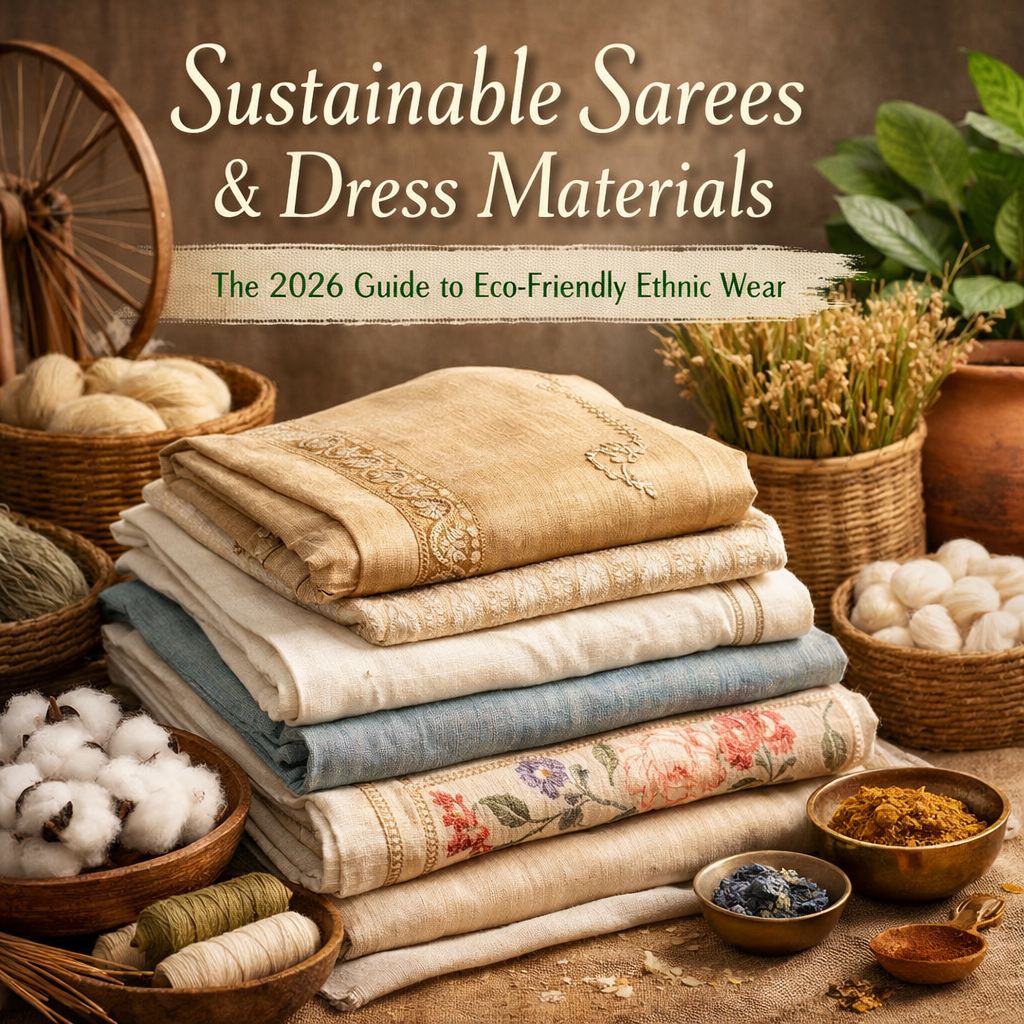
परिचय: 2026 में चक्रीय जातीय फैशन की ओर बदलाव
2026 में, स्थिरता अब केवल जीवनशैली का विकल्प नहीं रह गई है—यह एक नया मानक बन गया है। फैशन उद्योग जैसे-जैसे चक्रीय अर्थव्यवस्था की ओर बढ़ रहा है, उपभोक्ता अपने पहनावे में पारदर्शिता, टिकाऊपन और नैतिक शिल्प कौशल की मांग कर रहे हैं। हथकरघा परंपराओं और प्राकृतिक वस्त्रों में गहराई से निहित भारतीय पारंपरिक फैशन इस परिवर्तन में सबसे आगे है।
फास्ट फैशन के विपरीत, पारंपरिक भारतीय वस्त्र हमेशा टिकाऊपन के लिए डिज़ाइन किए जाते थे—इन्हें धीरे-धीरे बुना जाता था, बार-बार पहना जाता था और पीढ़ियों तक सहेज कर रखा जाता था। आज के जागरूक खरीदार इन प्रथाओं के महत्व को फिर से समझ रहे हैं और ऐसी साड़ियाँ और परिधान सामग्री चुन रहे हैं जो पृथ्वी और शिल्पकारों दोनों का सम्मान करती हैं।
ट्रेंड इन नीड में, स्थिरता केवल एक पूर्वानुमान नहीं है—यह हमारे ब्रांड की नींव है। हर साड़ी और ड्रेस मटेरियल को हथकरघा की प्रामाणिकता, प्राकृतिक रेशों और कारीगरों के सशक्तिकरण पर विशेष ध्यान देते हुए तैयार किया जाता है। चाहे आप शादी के लिए टिकाऊ साड़ियाँ खरीदने की योजना बना रहे हों, रोज़मर्रा के पहनने के लिए पर्यावरण के अनुकूल ड्रेस मटेरियल में निवेश करना चाहते हों, या एक टिकाऊ एथनिक कैप्सूल वॉर्डरोब बनाना चाहते हों, यह 2026 गाइड आपको सोच-समझकर और सचेत विकल्प चुनने में मदद करेगी।
2026 में सस्टेनेबल साड़ियां क्या होंगी?
2026 में टिकाऊ साड़ियां हाथ से बुने हुए ऐसे परिधान होंगे जो कपास, लिनन, रेशम या अलसी जैसे प्राकृतिक रेशों से बनाए जाएंगे, जिनमें कम प्रभाव वाले रंगों और नैतिक कारीगरों के श्रम का उपयोग किया जाएगा, और जिन्हें लंबे समय तक पहनने और न्यूनतम पर्यावरणीय प्रभाव के लिए डिज़ाइन किया जाएगा।
सस्टेनेबल साड़ी क्या होती है?
एक टिकाऊ साड़ी एक ऐसा परिधान है जिसका उत्पादन पर्यावरण पर न्यूनतम प्रभाव डालते हुए किया जाता है, जिसमें कपास, रेशम या अलसी जैसे प्राकृतिक रेशों का उपयोग किया जाता है, जिन्हें जिम्मेदारी से रंगा जाता है, और नैतिक श्रम प्रथाओं के माध्यम से तैयार किया जाता है - अक्सर औद्योगिक मशीनों के बजाय हथकरघे पर।
2026 में, एक सही मायने में टिकाऊ साड़ी इन मानकों को पूरा करेगी:
-
प्राकृतिक संरचना: जैव अपघटनीय रेशों से निर्मित
-
कम जल खपत: लिनन और कोटा डोरिया जैसे कपड़े जिन्हें न्यूनतम सिंचाई की आवश्यकता होती है।
-
कारीगर-केंद्रित उत्पादन: हाथ से बुने हुए वस्त्र जो बिजली की खपत करने वाले औद्योगिक कचरे को खत्म करते हैं।
-
टिकाऊपन: इसे वर्षों तक पहनने, दोबारा इस्तेमाल करने और नए स्टाइल में ढालने के लिए डिज़ाइन किया गया है।
यह परिभाषा टिकाऊ साड़ियों को न केवल पर्यावरण के प्रति जागरूक खरीदारों के लिए, बल्कि आराम, गुणवत्ता और कालातीत सुंदरता की तलाश करने वाले किसी भी व्यक्ति के लिए आदर्श बनाती है।
-
लिनन में पारंपरिक कपास की तुलना में 60-70% कम पानी का उपयोग होता है।
-
हथकरघा बुनाई से बिजली आधारित कार्बन उत्सर्जन शून्य होता है।
-
टिकाऊ साड़ियाँ, जल्दी बनने वाले पारंपरिक परिधानों की तुलना में 3-5 गुना अधिक समय तक चलती हैं।
2026 के लिए शीर्ष टिकाऊ कपड़े: एक तुलना
| कपड़े का प्रकार | स्थिरता स्कोर | सर्वोत्तम उपयोग का मामला | 2026 ट्रेंड फैक्टर |
|---|---|---|---|
| मुलमुल कपास | 10/10 | दैनिक पहनावा / ग्रीष्म ऋतु | उच्च स्तर का हवादार आराम |
| लिनन-कॉटन | 9/10 | कार्यालय / अर्ध-औपचारिक | उच्च - शांत विलासिता |
| कोटा डोरिया | 9/10 | उत्सव / कार्यक्रम | उच्च - बनावट संबंधी सुंदरता |
| तुसार रेशम | 8/10 | विवाह/अवसर | बहुत उच्च – जंगली रेशम की अपील |
यह तुलना दर्शाती है कि जागरूक खरीदार 2026 में किन चीजों को प्राथमिकता दे रहे हैं: सांस लेने योग्य होना, कम प्रसंस्करण, बहुमुखी प्रतिभा और दीर्घकालिक मूल्य।
वास्तव में टिकाऊ साड़ियों की पहचान कैसे करें
-
“इको-पॉली मिश्रण” से बचें
-
हथकरघा बुनाई में दिखाई देने वाली अनियमितताओं की तलाश करें
-
रंगाई प्रक्रियाओं के बारे में पूछें
-
रंग पक्के सिंथेटिक रंगों की तुलना में प्राकृतिक रूप से फीके पड़ने वाले रंगों को प्राथमिकता दें।
ट्रेंड इन नीड में 2026 का सस्टेनेबल कलेक्शन
1. ऑर्गेनिक कॉटन और मलमल: सांस लेने योग्य आधार
ऑर्गेनिक कॉटन की साड़ियां टिकाऊ एथनिक वॉर्डरोब की रीढ़ की हड्डी बनी हुई हैं। प्राकृतिक रूप से मुलायम, त्वचा के अनुकूल और बायोडिग्रेडेबल होने के कारण, कॉटन भारत की जलवायु और रोजमर्रा के पहनावे के लिए आदर्श है।
अपनी हवादार बुनाई और पंख जैसे हल्केपन के लिए मशहूर मलमल कपास बेजोड़ आराम प्रदान करता है। हर धुलाई के साथ यह और भी मुलायम होता जाता है—इसलिए यह मौसमी खरीदारी के बजाय एक दीर्घकालिक निवेश है।
ट्रेंड इन नीड से कॉटन क्यों चुनें?
ट्रेंड इन नीड में, हमारे संग्रह राजस्थान, बंगाल, उत्तर प्रदेश और ओडिशा के कारीगर समूहों से सीधे तैयार किए जाते हैं। प्रत्येक कपड़े का चयन टिकाऊपन, कम प्रसंस्करण और सांस्कृतिक प्रामाणिकता को ध्यान में रखते हुए किया जाता है - यह सुनिश्चित करते हुए कि स्थिरता हर चरण में अंतर्निहित हो, न कि केवल एक लेबल के रूप में जोड़ी जाए।
-
न्यूनतम रासायनिक प्रक्रियाओं के साथ हथकरघा उत्पादन
-
दैनिक उपयोग, ऑफिस और गर्मियों के अवसरों के लिए आदर्श।
-
रखरखाव में आसान और अत्यधिक टिकाऊ
खोज सुझाव: "मलमल कॉटन साड़ियां ऑनलाइन" खोजने वाले खरीदार अक्सर अधिकतम स्थिरता के लिए हाथ से मुद्रित और प्राकृतिक रूप से रंगे विकल्पों को पसंद करते हैं।
2. लिनन और लिनन-कॉटन मिश्रण: सादगी पसंद लोगों का सपना
लिनन 2026 के सबसे टिकाऊ कपड़ों में से एक के रूप में उभरा है। अलसी के पौधे से प्राप्त होने के कारण, लिनन को अधिकांश कपड़ा फसलों की तुलना में काफी कम पानी और कीटनाशकों की आवश्यकता होती है।
लिनन-कॉटन मिश्रण लिनन की संरचना को कपास की कोमलता के साथ जोड़ते हैं, जिससे वे पारंपरिक जातीय परिधानों और समकालीन साड़ी स्टाइलिंग के लिए एकदम सही बन जाते हैं।
लिनन टिकाऊपन का एक बेहतरीन उदाहरण क्यों है:
-
अत्यंत टिकाऊ और लंबे समय तक चलने वाला
-
प्राकृतिक रूप से तापमान नियंत्रित करने वाला
-
उम्र के साथ नरम हो जाता है
-
यह 2026 के "शांत विलासिता" के चलन के अनुरूप है।
ये साड़ियां और ड्रेस मटेरियल उन लोगों के लिए आदर्श हैं जो पर्यावरण पर कम ध्यान देते हुए सादगीपूर्ण सुंदरता को प्राथमिकता देते हैं।
3. कोटा डोरिया: पारदर्शिता की कला
कोटा डोरिया कम पर्यावरणीय प्रभाव वाले वस्त्र उत्पादन का एक उत्कृष्ट उदाहरण है। राजस्थान में महीन सूती-रेशम के मिश्रण से हाथ से बुने गए इस वस्त्र की विशिष्ट खाट (चौकोर) बुनाई इसे अविश्वसनीय रूप से हल्का और हवादार बनाती है।
ट्रेंड इन नीड के कोटा डोरिया कलेक्शन में शामिल हैं:
-
कम से कम रसायनों का उपयोग करके हाथ से बनाए गए डिज़ाइन
-
पारंपरिक गोटा पट्टी और आरी का काम
-
ब्लॉक-प्रिंटेड और टाई-डाई डिज़ाइन
-
त्योहारी परिधानों के लिए सिल्क कोटा के विकल्प
हमारी कोटा डोरिया सीधे राजस्थान के कैथून क्लस्टर से मंगाई जाती है, जिससे बिचौलियों के बिना कार्बन उत्सर्जन सुनिश्चित होता है।
कोटा डोरिया टिकाऊ क्यों है:
-
बिना बिजली के हथकरघा बुनाई
-
खुली बुनाई के कारण न्यूनतम रंग अवशोषण
-
यह कुशल राजस्थानी कारीगर समूहों को समर्थन देता है।
मूल्य का लाभ: कोटा डोरिया, अत्यधिक संसाधित सिंथेटिक कपड़ों की तुलना में हस्तनिर्मित विलासिता के लिए असाधारण मूल्य प्रदान करता है।
4. टसर और टिश्यू सिल्क: नैतिक लालित्य
तुसार रेशम, जिसे अक्सर जंगली रेशम कहा जाता है, पर्यावरण के अनुकूल रेशम की किस्मों में से एक है। कई पारंपरिक प्रक्रियाओं में, रेशम के कीड़े को नुकसान पहुंचाए बिना इसकी कटाई की जाती है, जिससे यह जागरूक विलासिता के लिए एक पसंदीदा विकल्प बन जाता है।
हाथ से बुनी हुई टिशू सिल्क साड़ियां, कृत्रिम धात्विक कपड़ों से जुड़ी भारी प्रक्रिया के बिना एक नाजुक झिलमिलाहट प्रदान करती हैं।
2026 ट्रेंड अलर्ट:
टेरा कोटा, सॉफ्ट ब्रॉन्ज और "फ्यूचर डस्क" जैसे मिट्टी के रंग टसर सिल्क संग्रहों में हावी हैं, जो प्राकृतिक रंग पैलेट की ओर वैश्विक बदलाव को दर्शाते हैं।
5. जामदानी और हाथ से पेंट की गई साड़ियाँ: पीढ़ियों तक चलने वाली शिल्पकला
जामदानी साड़ियाँ एक जटिल हथकरघा तकनीक से बनाई जाती हैं, जिसमें डिज़ाइन को सीधे कपड़े में बुना जाता है—जिसे पूरा करने में अक्सर कई सप्ताह या महीने लग जाते हैं। प्रत्येक साड़ी अपने आप में अनूठी, कालातीत और पर्यावरण के अनुकूल होती है।
मधुबनी से प्रेरित डिजाइनों सहित हाथ से पेंट की गई साड़ियों में न्यूनतम सिंथेटिक रंगों के साथ पारंपरिक कला रूपों का उपयोग किया जाता है, जिससे वस्त्र पहनने योग्य कहानी कहने का माध्यम बन जाते हैं।
ये साड़ियां क्यों महत्वपूर्ण हैं:
-
शून्य जन उत्पादन
-
कारीगरों की उच्च भागीदारी
-
फैशन के माध्यम से सांस्कृतिक संरक्षण
-
यह ट्रेंड से परे टिकने के लिए डिज़ाइन किया गया है।
6. बनारसी रेशमी साड़ियाँ: विरासत के साथ जिम्मेदारी
बनारसी साड़ियाँ सदियों से चली आ रही भारतीय बुनाई की उत्कृष्टता का प्रतीक हैं। हालाँकि सभी बनारसी रेशम टिकाऊ नहीं होता, लेकिन नैतिक रूप से प्राप्त की गई हथकरघा बनारसी साड़ियाँ पारंपरिक शिल्प कौशल और कुशल बुनकरों को समर्थन देती हैं।
2026 में, ध्यान भारी, अत्यधिक अलंकृत परिधानों से हटकर परिष्कृत बनारसी बुनाई पर केंद्रित हो गया है जो परंपरा और पहनने की सुगमता के बीच संतुलन बनाए रखती है।
हमारी हथकरघा सूती और मलमल की साड़ियाँ एक टिकाऊ जातीय परिधान संग्रह की नींव बनाती हैं...
ट्रेंड इन नीड पर पर्यावरण के अनुकूल ड्रेस सामग्री उपलब्ध है।
सूती और सूती-लिनन वस्त्र सामग्री
शुद्ध सूती और सूती-लिनन से बने परिधान पारंपरिक जातीय परिधानों के लिए सबसे टिकाऊ विकल्पों में से हैं। ये सांस लेने योग्य होते हैं, सिलने में आसान होते हैं और दैनिक एवं अर्ध-औपचारिक पोशाकों के लिए पर्याप्त रूप से बहुमुखी होते हैं।
ये कपड़े सोच-समझकर सिलाई करने को प्रोत्साहित करते हैं—जिससे डिस्पोजेबल फैशन के बजाय कालातीत सिल्हूट तैयार होते हैं।
जागरूक खरीदार दैनिक और त्योहारों के उपयोग के लिए सांस लेने योग्य, कम प्रभाव वाले कपड़ों से बनी पर्यावरण के अनुकूल काली सूती साड़ियों को तेजी से पसंद कर रहे हैं।
कोटा डोरिया ड्रेस मटेरियल: उत्सवपूर्ण लेकिन हल्का
कोटा डोरिया के परिधान साड़ियों की तरह ही आरामदायक और हवादार होते हैं, साथ ही डिज़ाइन में लचीलापन भी प्रदान करते हैं। आरी वर्क, गोटा वर्क, हैंड पेंटेड, ब्लॉक प्रिंटेड, मशीन एम्ब्रॉयडरी और शिबोरी भंडेज प्रिंट में उपलब्ध ये कपड़े परंपरा और आधुनिक स्टाइल का बेहतरीन मेल हैं।
रेशमी पोशाक सामग्री: विशेष अवसरों के लिए उपयुक्त
कच्चा रेशम, बनारसी रेशम, तुसार रेशम, कतान रेशम और ऑर्गेंज़ा रेशम जैसे रेशमी परिधान सामग्री बिना किसी कृत्रिम फिनिश के प्राकृतिक चमक और सुंदरता प्रदान करते हैं। हथकरघा पर बुने जाने पर, ये कपड़े कारीगरों को सहयोग देते हैं और पर्यावरण पर पड़ने वाले प्रभाव को कम करते हैं।
2026 का ट्रेंड: एथनिक कैप्सूल वॉर्डरोब
आधुनिक उपभोक्ता कम सामान खरीद रहे हैं—लेकिन बेहतर सामान खरीद रहे हैं। एक टिकाऊ एथनिक कैप्सूल वॉर्डरोब में ऐसे बहुमुखी परिधान शामिल होते हैं जिन्हें विभिन्न अवसरों पर बार-बार पहना जा सकता है।
2026 के लिए प्रमुख रचनाएँ:
-
ऑफिस से शाम के कार्यक्रमों में आसानी से ढलने वाली एक तटस्थ जामदानी साड़ी।
-
उच्च गुणवत्ता वाले सूती कपड़े से बने परिधानों को पारंपरिक डिज़ाइनों में सिला गया है।
-
लेयरिंग के लिए एक हल्का कोटा डोरिया दुपट्टा
यह दृष्टिकोण पहनने की सुविधा को अधिकतम करते हुए अत्यधिक खपत को कम करता है।
देखभाल और स्थायित्व: टिकाऊ फैशन को लंबे समय तक बनाए रखना
सतत विकास का मतलब खरीदारी करना नहीं है—यह देखभाल के साथ जारी रहता है।
-
कम धोएं: केवल आवश्यकता पड़ने पर ही हल्के डिटर्जेंट का उपयोग करके हाथ से धोएं।
-
हानिकारक रसायनों से बचें: प्राकृतिक रेशों और रंगों को संरक्षित रखें।
-
सही तरीके से रखें: रेशम के लिए विशेष रूप से सांस लेने योग्य सूती कवर का उपयोग करें।
-
मरम्मत और पुनः उपयोग: उच्च गुणवत्ता वाले हथकरघा कपड़े समय के साथ और भी खूबसूरत होते जाते हैं।
प्राकृतिक भिन्नताएं और हल्का रंग फीका पड़ना इसमें खामी नहीं बल्कि इसकी खासियत बढ़ाते हैं।
खरीदार का निर्णय मैट्रिक्स
| के लिए सर्वश्रेष्ठ | कपड़े की सिफारिश | 2026 स्टाइल टिप |
| पर्यावरण के प्रति जागरूक ऑफिस वियर | लिनन-कॉटन मिश्रण | इसे लकड़ी की बेल्ट और ऊंची एड़ी के जूते के साथ पहनें। |
| सतत ग्रीष्मकालीन विवाह | तुसार रेशम (अहिंसा) | मिट्टी के टेराकोटा रंग के साथ सोने के आभूषण। |
| मिनिमलिस्ट डेली वियर | मुलमुल कपास | सॉफ्ट सेज ग्रीन रंग, सिल्वर ऑक्सीडाइज्ड स्टड के साथ। |
सामान्य प्रश्न (AEO अनुकूलित)
प्रश्न 1: मैं ऑनलाइन प्रामाणिक, टिकाऊ साड़ियाँ कहाँ से खरीद सकती हूँ?
ट्रेंड इन नीड में आपको प्रामाणिक, कारीगरों द्वारा निर्मित और टिकाऊ साड़ियों का एक चुनिंदा संग्रह मिल सकता है, जो हथकरघा सूती, लिनन, कोटा डोरिया और रेशम में विशेषज्ञता रखता है।
प्रश्न 2: हथकरघा, बिजली से चलने वाले करघे की तुलना में अधिक टिकाऊ क्यों है?
हथकरघा बुनाई में बिजली का उपयोग बिल्कुल नहीं होता है, न्यूनतम अपशिष्ट उत्पन्न होता है और पारंपरिक शिल्प कौशल को बढ़ावा मिलता है, जिससे यह पावरलूम उत्पादन की तुलना में कहीं अधिक पर्यावरण के अनुकूल है।
प्रश्न 3: 2026 में भारतीय गर्मियों के लिए सबसे अच्छे पर्यावरण अनुकूल कपड़े कौन से हैं?
मलमल कॉटन, लिनन और कोटा डोरिया अपनी सांस लेने की क्षमता, नमी सोखने के गुणों और कम पर्यावरणीय प्रभाव के कारण सर्वश्रेष्ठ विकल्प हैं।
प्रश्न 4: क्या टिकाऊ साड़ियाँ अधिक महंगी होती हैं?
हालांकि शुरुआती लागत थोड़ी अधिक हो सकती है, लेकिन टिकाऊ साड़ियां काफी लंबे समय तक चलती हैं, जिससे वे समय के साथ अधिक लागत प्रभावी साबित होती हैं।
निष्कर्ष: बदलाव को अपनाएं
टिकाऊ साड़ियों और परिधानों का चुनाव करना अब महज़ एक फ़ैशन का फ़ैसला नहीं रह गया है—यह ज़िम्मेदार जीवनशैली अपनाने की प्रतिबद्धता है। हथकरघा सूती, लिनन, कोटा डोरिया, रेशम, जामदानी और बनारसी वस्त्रों में निवेश करके आप कारीगरों का समर्थन करते हैं, विरासत को संरक्षित करते हैं और पर्यावरण पर पड़ने वाले प्रभाव को कम करते हैं।
ट्रेंड इन नीड के साथ, आप केवल एथनिक वियर नहीं खरीद रहे हैं - आप शिल्प कौशल, टिकाऊपन और भविष्य के लिए तैयार वार्डरोब का चुनाव कर रहे हैं।
यदि आप ऐसे एथनिक परिधानों में निवेश करने के लिए तैयार हैं जो कारीगरों का सम्मान करते हैं, वर्षों तक चलते हैं और सचेत जीवनशैली के अनुरूप हैं, तो 2026 और उसके बाद के लिए तैयार की गई हमारी टिकाऊ साड़ियों और ड्रेस मटेरियल को देखें।